
 -by
-by Abstract
For several decades, academic degrees have been regarded as the primary determinant of employability and career success. However, rapid technological advancement, evolving industry requirements, and changing workforce dynamics have challenged this long-standing paradigm. While formal education remains important, industry-ready skills have emerged as a critical factor in determining professional relevance and long-term career sustainability. This article reviews the growing emphasis on skill-based employability, examines the existing gap between academic preparation and workplace demands, and highlights the role of institutions and employers in fostering job-ready talent.
Introduction
Historically, higher education qualifications were viewed as the principal gateway to professional opportunities. Possession of a degree signified subject knowledge, intellectual capability, and readiness for employment. In contemporary labor markets, however, this assumption is increasingly being questioned. Employers today operate in fast-paced, outcome-oriented environments that require immediate contribution and adaptability. As a result, industry-ready skills, rather than academic credentials alone have become the defining factor in employability.
The Persistent Skill Gap
Across industries, organizations report a consistent challenge: candidates may be academically qualified yet insufficiently prepared for practical workplace demands. New hires often require extensive training to bridge gaps in applied knowledge, professional conduct, and problem-solving ability. In a highly competitive economy, employers are constrained by time, cost, and productivity pressures, limiting their capacity for prolonged onboarding and training. This disconnect between academic learning and professional application has underscored the importance of skill-centric education and workforce preparation.
Defining Industry-Ready Skills
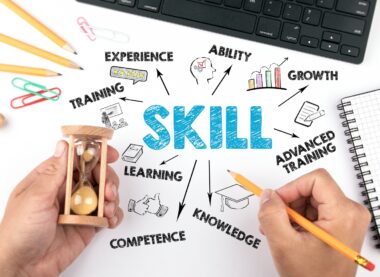
Industry-ready skills encompass a broad set of competencies that extend beyond technical knowledge. These include the practical application of domain expertise, analytical and critical thinking abilities, effective communication and collaboration, adaptability to evolving technologies and processes, and a strong sense of professional accountability. Such competencies are typically developed through experiential learning models, including internships, project-based work, mentorship, and continuous professional development. Unlike traditional classroom instruction, these approaches simulate real-world conditions and foster workplace readiness.
Degrees Versus Demonstrated Capability
While academic degrees serve as an indicator of theoretical understanding, they do not necessarily reflect an individual’s ability to perform in real-world scenarios. In contrast, demonstrable skills provide tangible evidence of competence and value creation. Consequently, organizations are increasingly adopting skill-based hiring practices, emphasizing portfolio assessments, project experience, internships, and practical evaluations over conventional examination scores. This shift reflects a broader transition toward performance-oriented recruitment and workforce development strategies.
The Emergence of Skill-Focused Career Pathways
Industries such as technology, healthcare, marketing, design, and operations are evolving at a pace that often exceeds curricular updates within formal education systems. Professionals who actively engage in upskilling and reskilling remain competitive and resilient in this dynamic environment. Conversely, reliance solely on previously acquired degrees may lead to skill obsolescence. Continuous learning has therefore become a fundamental requirement rather than an optional enhancement.
Institutional and Organizational Responsibilities
To effectively address employability challenges, educational institutions and employers must collaborate to create integrated learning ecosystems. Industry exposure, internship-driven education, mentorship programs, and outcome-based training models are essential components of such frameworks. Aligning academic instruction with industry expectations ensures that graduates possess both foundational knowledge and practical competence, thereby enhancing workforce readiness.
Conclusion
Although academic degrees continue to play an important role in establishing foundational knowledge, they are no longer sufficient as standalone indicators of employability. Industry-ready skills are increasingly central to career sustainability and professional advancement. In a rapidly evolving global economy, the ability to adapt, apply knowledge effectively, and deliver measurable outcomes defines success. Ultimately, degrees may open opportunities, but it is industry-ready skills that sustain and advance careers in the long term.